Quinn Griffin · 26 September 2026
Adapting Lightweight Toolchains for Custom Sensor Arrays in Agricultural Monitoring Projects
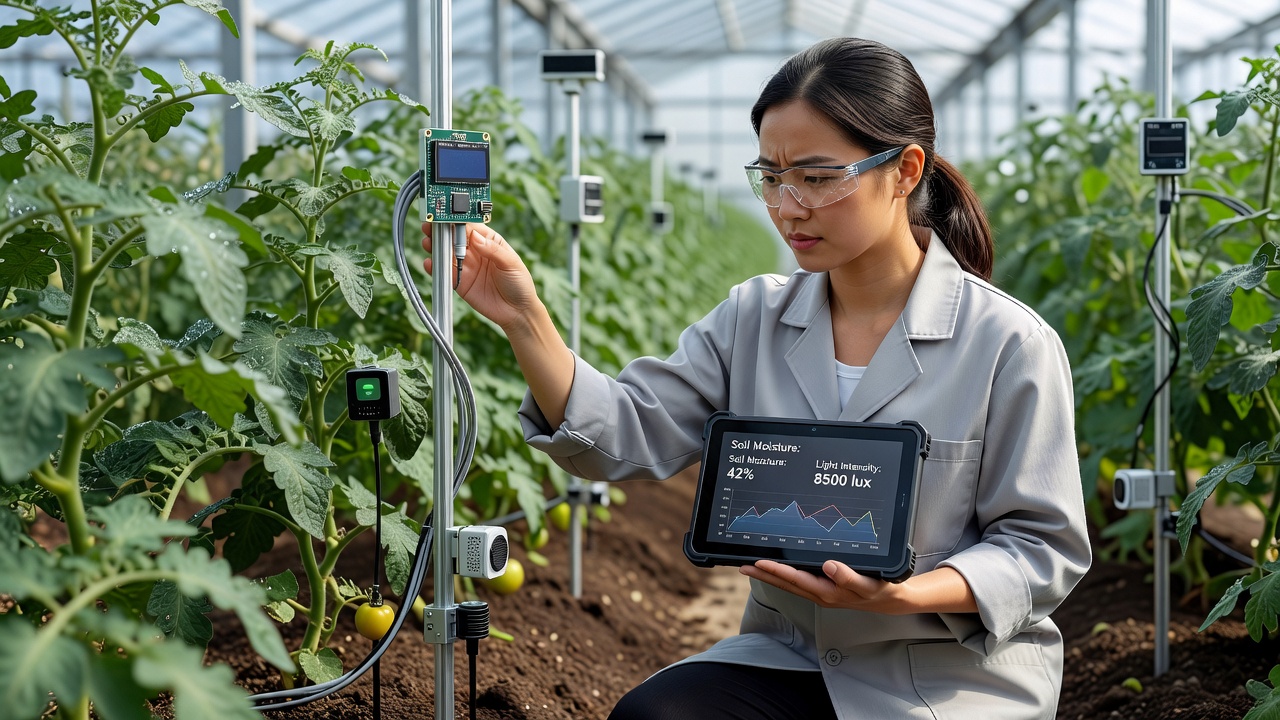
Researchers across multiple continents continue to adapt lightweight toolchains for custom sensor arrays that support real-time agricultural monitoring, and these efforts focus on microcontrollers such as those based on RP2040 architectures along with optimized build systems that minimize resource overhead while maintaining data accuracy. Projects often combine low-power wireless modules, soil probes, and environmental sensors into unified arrays that transmit metrics including moisture levels, temperature gradients, and nutrient concentrations directly to centralized farm management platforms.
Core Components of Lightweight Toolchains in Sensor Development
Toolchains built around cross-compilers, minimal runtime libraries, and modular SDKs allow engineers to compile firmware for sensor nodes without excessive memory usage, and data from field trials indicate that such setups reduce flash requirements by up to 40 percent compared with standard embedded environments. Engineers configure these toolchains to support custom peripheral drivers for sensors that measure variables like pH and electrical conductivity, while integrated debuggers enable rapid iteration during array calibration sessions.
Observers note that frameworks derived from open-source ecosystems provide the flexibility needed for tailoring interrupt handling and power management routines specifically to intermittent solar or battery supplies common in remote agricultural installations, and this approach supports continuous operation across seasonal cycles without frequent hardware swaps.
Design Considerations for Custom Sensor Arrays
Custom arrays typically incorporate clusters of digital and analog sensors arranged in grid patterns across fields, and researchers coordinate data sampling intervals through lightweight scheduling algorithms that prevent collisions on shared communication buses. Calibration routines embedded in the toolchain firmware account for sensor drift caused by soil salinity changes, whereas modular code structures allow individual nodes to be updated independently during maintenance windows.
Studies conducted by agricultural research stations show that arrays equipped with adaptive sampling logic capture higher-resolution datasets during critical growth periods, and integration with lightweight build pipelines ensures that firmware updates propagate across hundreds of nodes within minutes rather than hours. Geographic information systems then overlay the collected readings onto farm maps to reveal spatial patterns in crop stress indicators.
Implementation Examples from Global Agricultural Initiatives
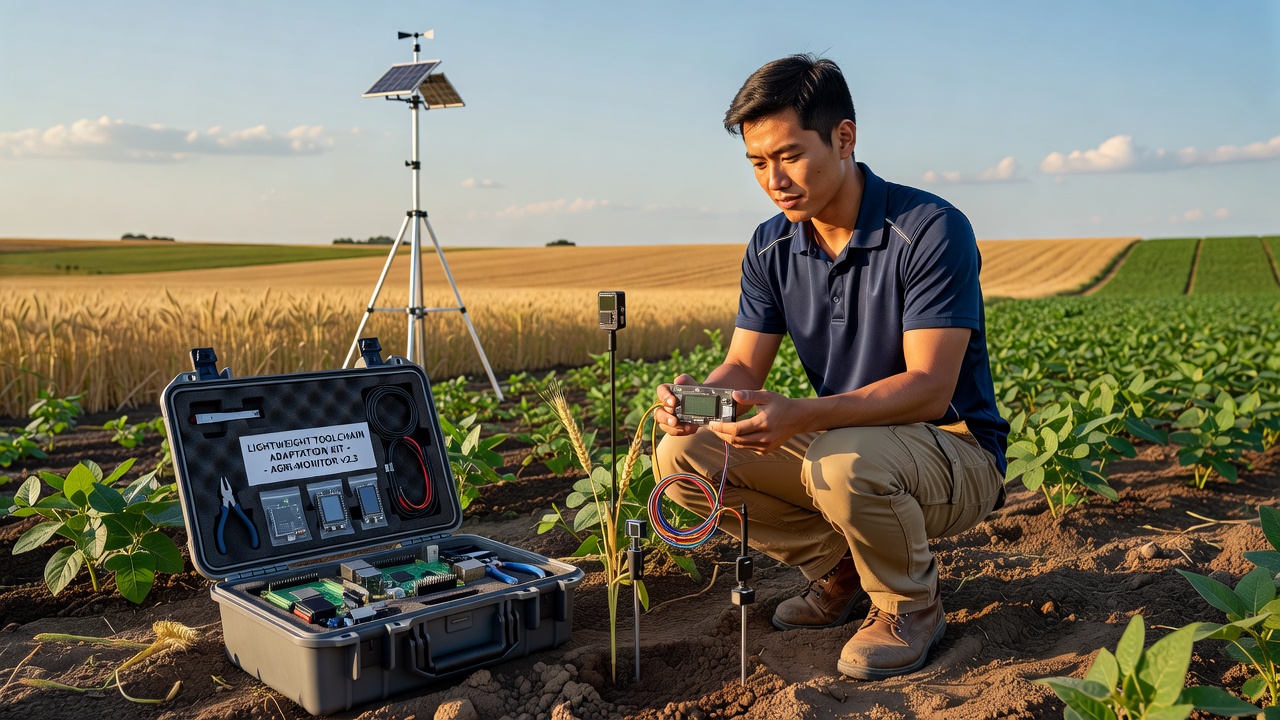
Teams working in North American grain belts have deployed toolchain-adapted arrays that interface with existing irrigation controllers, and figures released by the United States Department of Agriculture reveal yield improvements averaging 12 percent in monitored plots where sensor density reached one unit per hectare. Similar configurations appear in Australian viticulture operations where researchers link soil moisture data streams to automated valve systems that conserve water during drought conditions.
European projects coordinated through institutions in the Netherlands and Germany emphasize toolchain modifications that support LoRaWAN gateways for long-range telemetry, and reports from the European Commission’s Joint Research Centre document reduced energy consumption rates when custom firmware replaces generic operating systems in sensor gateways. Canadian prairie monitoring programs further illustrate how toolchain portability enables rapid redeployment of arrays between wheat and canola seasons without extensive recoding.
Data Integration and Analysis Pipelines
Once sensor arrays collect raw readings, lightweight toolchain outputs feed into edge processing units that perform preliminary filtering before transmission to cloud repositories, and this layered architecture minimizes bandwidth demands on rural networks. Analysts apply statistical models to detect anomalies such as sudden humidity spikes that precede fungal outbreaks, while version-controlled toolchain repositories ensure reproducibility across multi-year studies.
Research indicates that standardized data formats generated by adapted toolchains facilitate direct ingestion into machine learning frameworks used for predictive yield modeling, and collaborations between universities in Brazil and South Africa have produced open datasets demonstrating correlation coefficients above 0.85 between sensor-derived evapotranspiration rates and actual crop water use.
Upcoming Developments Scheduled for September 2026
Documentation from ongoing multi-site trials points toward toolchain enhancements planned for release in September 2026 that incorporate improved support for emerging low-power wide-area network standards, and these updates will include automated calibration scripts tailored to new generations of capacitive soil sensors. Agricultural agencies in New Zealand and Japan have signaled participation in joint validation exercises that will test array performance under varied climatic conditions throughout the following harvest cycle.
Conclusion
Adaptations of lightweight toolchains continue to expand the capabilities of custom sensor arrays deployed for agricultural monitoring, and evidence from field deployments across continents demonstrates measurable gains in data fidelity alongside reductions in deployment costs. Continued refinement of these systems supports broader adoption of precision techniques that align resource inputs with site-specific crop requirements, and ongoing international coordination ensures that toolchain improvements remain compatible with diverse regulatory and environmental contexts.